







Keynote lecture for the academic community
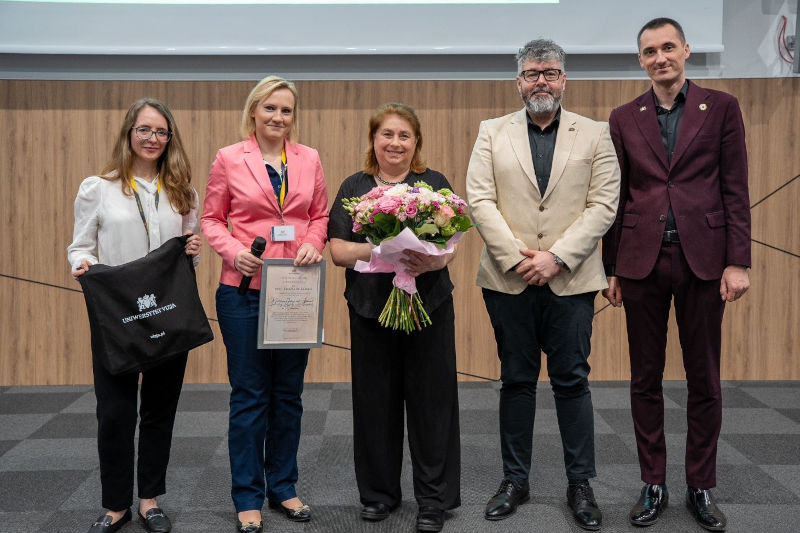
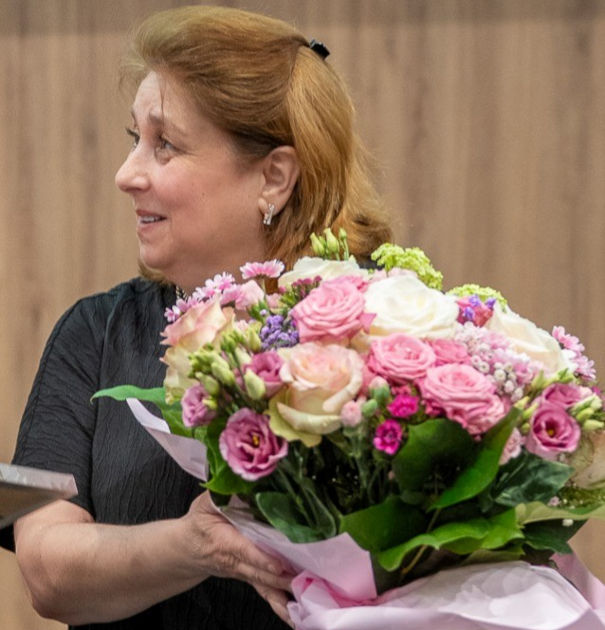
On March 18, VIZJA University celebrated the official inauguration of VISION – European Center for Multilingualism in Teacher Education at the School of Humanities and Fine Arts, a landmark initiative supported by the Didactic Excellence Office. We were honored to welcome Prof. Gessica De Angelis, a world-renowned authority on multilingualism, as the first distinguished guest of the VISION Center.
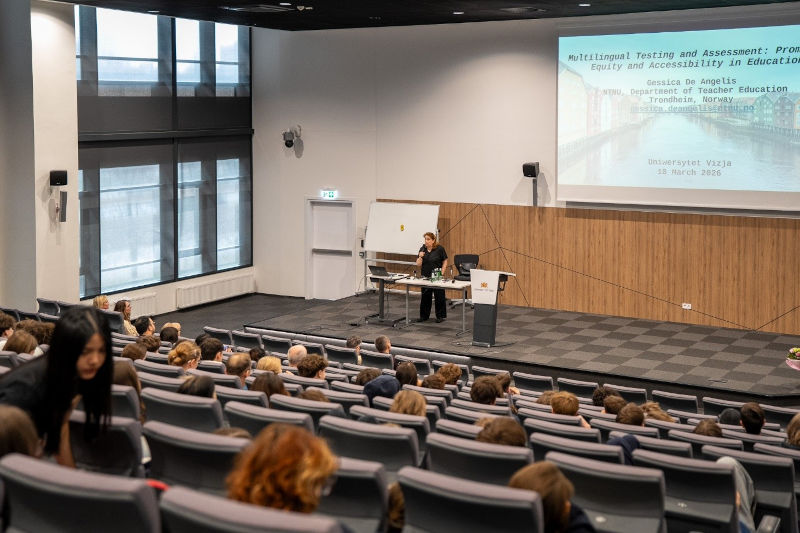
Prof. Gessica De Angelis delivered a keynote lecture entitled “Multilingual Testing and Assessment: Promoting Equity and Accessibility in Education.” She underscored the increasingly diverse linguistic and cultural landscape that has emerged in many parts of the world as a result of large-scale migration, particularly in economically developed countries, where first- and second-generation immigrants coexist alongside long-established minority language communities. These demographic shifts have created significant challenges for educational systems and prompted renewed reflection on the adequacy of monolingual assessment practices in multilingual contexts.
Rethinking Assessment in Multilingual Education
The lecture highlighted concerns surrounding the continued predominance of monolingual testing within national and international standardised assessment frameworks, especially in educational environments where languages other than the dominant language are widely used. Particular attention was given to the classification and treatment of migrant and minority language speakers in bilingual and multilingual regions, where several languages function simultaneously within communities and educational institutions. It was noted that monolingual assessment practices may place multilingual learners and non-native speakers at a systematic disadvantage by limiting opportunities to demonstrate knowledge and competencies fully.
A central focus of the keynote concerned the potential role of artificial intelligence (AI) in addressing some of the limitations associated with traditional monolingual assessment models. The presentation explored how AI-driven technologies, including automated translation tools and multilingual language models, may contribute to the development of more inclusive and accessible testing practices. Possible applications encompass the adaptation of test materials across languages and the enhancement of assessment accessibility for multilingual learners.
AI, Equity and the Future of Multilingual Assessment
At the same time, Prof. De Angelis noted that the integration of AI into multilingual assessment involves significant methodological, ethical, and practical considerations. Issues such as translation accuracy, linguistic and cultural bias, reliability, validity, and the differential performance of AI systems across languages were discussed as important areas requiring careful examination. Drawing on current research into the adaptability of language models to multilingual test formats, the presentation provided a balanced analysis of both the opportunities and the challenges associated with AI-supported multilingual assessment.
The keynote further reflected Prof. Gessica De Angelis’s broader scholarly contributions to the fields of multilingual education, multilingual language acquisition, and multilingual testing and assessment. Her publications include the monographs Third or Additional Language Acquisition and Multilingual Testing and Assessment, alongside numerous edited volumes, journal articles, and book chapters. She also served as Vice-President of the International Association of Multilingualism.
The event concluded with a vibrant, interactive discussion involving our academic faculty and high school students, whose engaging inquiries made the inauguration a truly remarkable and inspiring endeavor. By advocating for assessment that capitalizes on students’ full linguistic repertoire, the VISION Center promotes a more equitable environment where multilingual students should not be penalized for their diverse linguistic backgrounds but be empowered by them instead.