VISION – European Center for Multilingualism in Teacher Education
VISION – European Center for Multilingualism in Teacher Education at VIZJA University serves as a scholarly and socio-educational hub dedicated to advancing multilingualism in diverse teaching and learning contexts across Europe and beyond.

Mission and aims
The mission of VISION - European Center for Multilingualism in Teacher Education is to support and promote multilingualism in diverse educational contexts, with particular emphasis on its importance in teacher education. The VISION Center strives to develop and disseminate innovative teaching solutions, as part of multilingual pedagogies, that enable the conscious and effective use of multiple languages in teacher education, as well as the teaching and learning processes, addressing the challenges of contemporary, socially and culturally diverse educational environments.
The implementation of this mission is based on the integration of research, teaching, and community-oriented activities. VISION actively advances research on multilingualism and teacher education, publishing its findings and incorporating them into educational practice. A key element of its mission is supporting the development of future teachers by promoting student projects and enriching syllabi with content and courses related to multilingualism. By organizing expert lectures, debates, and academic events at both national and international levels, VISION also creates a space for dialogue among researchers, teachers, and students, fostering the exchange of knowledge and experience.
International cooperation
The VISION Center places strong emphasis on international cooperation, developing partnerships between European universities, including the Erasmus+ programme, and building networks that foster mobility, the exchange of good practices, and joint research and educational initiatives. At the same time, it engages in community-oriented activities in cooperation with local schools, supporting the implementation of multilingualism in educational practice at various stages of education.
VISION also develops resources that support multilingual education, including the continuous updating of library collections, and it aims to serve as an international reference center, providing a point of reference for institutions and specialists interested in multilingualism. In this way, it contributes to improving the quality of education and strengthening the role of multilingualism as a key component of modern education systems.
VISION – European Center for Multilingualism in Teacher Education
events in the 2025/26 academic year
June 16, 2026
Second Academic Seminar - Prof. UV Luis Pentón Herrera
“Social Emotional Learning in and for Multilingual Teacher Education: Improving the Quality of Teaching and Learning”
Read moreMay 24, 2026
Prof. Jean-Marc Dewaele Honored with the Distinguished Scholar Award
Prof. Jean-Marc Dewaele Honored with the Distinguished Scholar Award by the International Association for the Psychology of Language Learning (IAPLL)
Read moreMay 8, 2026
Prof. Gessica De Angelis Honoured as Distinguished Scholar
His Magnificence, the Rector of VIZJA University, Confers the Title of Distinguished Scholar in Multilingualism and Teacher Education
Read moreMay 8, 2026
Academic seminar – Prof. Jean-Marc Dewaele
The VISION community had the pleasure to participate an online academic seminar led by the 2nd most influential linguist in the world in the Stanford rankings 2025.
Read moreMarch 18, 2026
The official opening of the VISION Centre
The plenary lecture was delivered by our Special Guest, Prof. Gessica De Angelis, a world-renowned expert in the field of multilingualism.
Read moreThe Board and Members
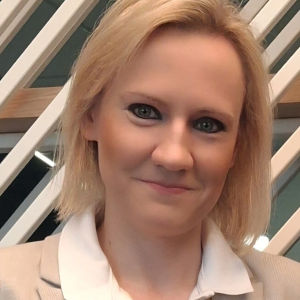
President of the VISION CenterKatarzyna Cybulska-Gómez de Celis, PhD
Katarzyna Cybulska-Gómez de Celis is an Assistant Professor at the School of Humanities and Fine Arts of VIZJA University in Warsaw, where she currently holds the position of Dean’s Plenipotentiary for Education in the English Studies BA programme; she received her PhD in linguistics from the Institute of English Studies at the University of Warsaw. She was also recognized as one of the highest-rated instructors at the Open University of the University of Warsaw.
Read more
Her research interests focus on multilingualism and plurilingual education, language teacher education, European language policy, and language learning in higher education. She has authored and co-authored articles in international and Polish journals (e.g. European Journal of Teacher Education, Ibérica, Advances in Cognitive Psychology, Roczniki Humanistyczne) and published book chapters in e.g. Teaching and Learning in Multilingual Contexts: Sociolinguistic and Educational Perspectives (edited by Agnieszka Otwinowska-Kasztelanic and Gessica De Angelis), Teacher of the 21st Century: Quality Teaching for Quality Education (edited by Linda Daniela), or Coping with Diversity: Language and Culture Education (edited by Hanna Komorowska and Lucyna Aleksandrowicz-Pędich).
She co-organized the Seventh International Conference on Third Language Acquisition and Multilingualism at the University of Warsaw under the auspices of the International Association of Multilingualism and presented her research at numerous international conferences hosted by the University of Luxembourg, the University of Latvia, the University of Bremen, the University of Pécs, Vilnius University, Universitat Jaume I in Castelló, Georgetown University, the University of California, Los Angeles (UCLA), CEU San Pablo University in Madrid, and the University of Warsaw.
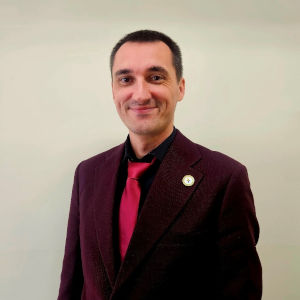
Vice-President of the VISION CenterAdam Świątek, PhD, EMBA
Adam Świątek, PhD, EMBA, is an Assistant Professor at the School of Humanities and Fine Arts at VIZJA University in Warsaw, where he specializes in teaching courses related to foreign language pedagogy and teacher education. Since the beginning of his academic and teaching career, he has been engaged in preparing future educators for the teaching profession.
Read more
Since April 2025, he has served as the Dean of the School of Humanities and Fine Arts at VIZJA University. In addition, since December 2025, he has held the position of the Rector of the International University of Logistics and Transport in Wrocław. In his scholarly publications and numerous presentations at international academic conferences, both in Poland and abroad – including in Greece, Croatia, Canada, and Turkey – he addresses issues such as the role of the teacher in contemporary education, students’ expectations of modern educators, the dynamic changes in educational systems, and the importance of emotional well-being in the school environment. This latter aspect is particularly significant from both psychological and professional-didactic perspectives. He is a certified Business English teacher and has completed postgraduate studies in Educational Management. In 2023, he obtained the prestigious Instructional Leadership certificate from the Harvard Graduate School of Education. In 2026, he completed postgraduate studies, earning the title of Executive Master of Business Administration (EMBA).
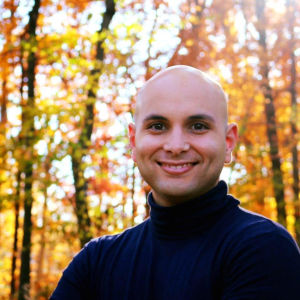
Director of the VISION CenterProf. UV Luis Penton Herrera, PhD. D.Litt (Hab.)
Luis Javier Pentón Herrera, PhD., D.Litt. (Hab.) is an award-winning Spanish and English educator and a best-selling author. In 2024, he was selected as the 2024 TESOL Teacher of the Year, awarded by the TESOL International Association and National Geographic Learning.
Read more
He is a Professor (Profesor uczelni, in Polish) at VIZJA University, Poland, and a Book Series Co-Editor of the Cambridge Elements in Language and Power (Cambridge University Press) and Contemporary Perspectives on Learning Environments book series (Emerald Publishing), as well as Co-Editor of Tapestry: A Multimedia Journal for Teachers and English Learners, and Associate Editor of Language Teacher Education Research. Further, he is a Fulbright Scholar and Specialist, and an English Language Specialist with the U.S. Department of State. Previously, he served as the 38th President of Maryland TESOL from 2018 to 2019, and earned the rank of Sergeant while serving in the United States Marine Corps (USMC). Two of his professional accolades include the '30 Up and Coming Emerging Leaders in TESOL', awarded by TESOL International Association in 2016, and the J. Estill Alexander Future Leader in Literacy Award, awarded by the Association of Literacy Educators and Researchers (ALER) in 2018, when his dissertation was chosen as ALER's 2018 Outstanding Dissertation of the Year. Dr. Pentón Herrera's current teaching and research projects are situated at the intersection of identity, emotions, and well-being in language and literacy education, social-emotional learning (SEL), autoethnography and storytelling, refugee education, and language weaponization. His books can be found in the University of Michigan Press, Routledge, Springer, Brill, De Gruyter, TESOL Press, Bucharest University Press, and Rowman & Littlefield. Originally from La Habana, Cuba.
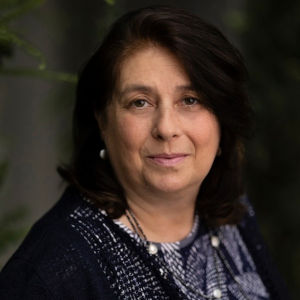
Honorary Member of the VISION CenterProf. Gessica De Angelis
Distinguished Scholar in Multilingualism and Teacher Education
Gessica De Angelis is Professor of Applied Linguistics/TESOL at the Department of Teacher Education, NTNU Trondheim, Norway. Her research focuses on multilingual education, multilingual language acquisition, and multilingual testing and assessment.
Read more
Her publications include two monographs (Third or Additional Language Acquisition, 2007; Multilingual Testing and Assessment, 2021), three edited volumes, and several journal articles and book chapters. She has given invited and plenary lectures across Europe, and she is the former Vice-President of the International Association of Multilingualism (2009-11; 2012-2014). She is currently actively involved in multilingual education research, with a particular focus on multilingual testing and assessment, and trauma-informed teaching.
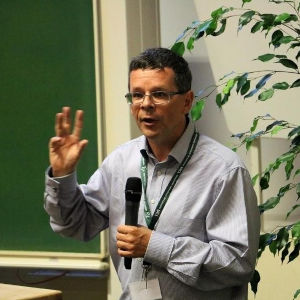
VIZJA University MemberProf. Jean-Marc Dewaele
Jean-Marc Dewaele is Professor at VIZJA University, Warsaw, Poland; Honorary Professor at University College London and Emeritus Professor at Birkbeck, University of London. He has published and edited 10 books, around 400 papers and chapters on emotion and individual differences in multilingualism and foreign language learning.
Read more
He is former president of the International Association of Multilingualism, the European Second Language Association and the International Association for the Psychology of Language Learning. He is General Editor of the Journal of Multilingual and Multicultural Development. He won the Equality and Diversity Research Award from the British Association for Counselling and Psychotherapy (2013), the Robert Gardner Award from the International Association of Language and Social Psychology (2016) and the Distinguished Scholar Award from the European Second Language Association (2022). He was ranked as the 2nd most influential linguist in the world in the Stanford rankings 2025.
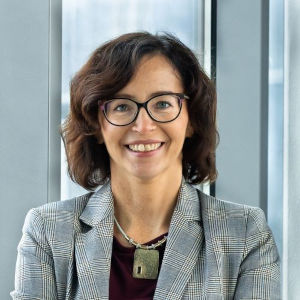
VIZJA University MemberProf. UV Magdalena Smoleń-Wawrzusiszyn
Magdalena Smoleń-Wawrzusiszyn, Associate Professor and Habilitated Doctor in Linguistics, is a specialist in the Polish language whose research focuses on teaching and learning Polish as a foreign and heritage language, applied rhetoric, and discourse studies. She is the author and co-author of numerous scholarly publications, including the recent Lexicon of Emblems of Polish Culture (Lublin, 2025).
Read more
She co-authored the bilingual children’s textbook series Learn Polish with Ania (Lublin–Chicago, 2015–2016) and the textbook Bilingual Language Communication Handbook for Emergency Services in the Polish–Slovak Border Region (Lublin, 2016). She also developed the methodological framework for the television language-learning series Play with the Words and the multimedia educational project Polish? We Say: Yes!, both designed to support the teaching of Polish language and culture to young members of the Polish diaspora.
At the John Paul II Catholic University of Lublin (KUL), she managed the Bachelor’s Programme in Polish Studies for students from China. She has supervised two doctoral dissertations in the field of foreign language teaching and learning, while two additional doctoral candidates are currently completing their research under her supervision.
In addition to teaching Polish to international students in Poland and abroad, she has conducted numerous courses and workshops on Polish language and culture for Polish diaspora communities in the United States, Canada, France, the United Kingdom, and Brazil. As a recipient of a Kościuszko Foundation scholarship, she spent a semester at the University of Notre Dame (USA), where she taught courses within the Polish Studies programme.
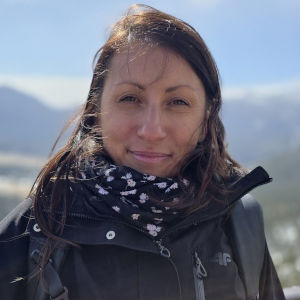
VIZJA University MemberMałgorzata Foryś-Nogala, PhD
Małgorzata Foryś-Nogala is an assistant professor in psychology at the School of Human Sciences, VIZJA University. She obtained her PhD from the Faculty of Psychology at the University of Warsaw. Her research interests focus on individual differences in second and third language acquisition, cross-linguistic influences in multilingual learning, and the implicit and explicit learning of grammar and vocabulary.
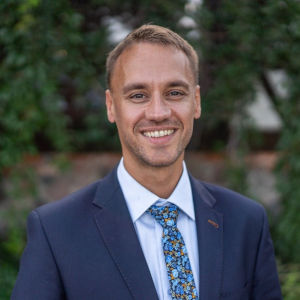
VIZJA University MemberProf. UV Michał Wilczewski, PhD, (Hab).
Michał Wilczewski, Ph.D., is a University Professor specializing in intercultural communication at VIZJA University. His research focuses on language, communication, and the cultural adaptation of international students, business expatriates, and missionaries, funded by grants from the National Science Centre (NCN) and the National Agency for Academic Exchange (NAWA).
Read more
He serves as an expert for the European Commission in Marie Skłodowska-Curie Actions, and as Deputy Secretary of the Research Group on Management and Language (GEM&L). He has received numerous awards, including the “Prime Minister’s Award” for outstanding scientific achievement in 2022 (the book Intercultural Experience in Narrative, John Benjamins) and the “AEH Lecturer of the Year 2023/2024” award. He has extensive research experience at leading national and international universities, including the University of Warsaw, the University of Bologna, Copenhagen Business School, and ESADE Business School. Michał Wilczewski is the author of numerous scientific publications in prestigious journals, such as Applied Linguistics (Oxford); Multilingua: Journal of Cross-Cultural and Interlanguage Communication; Higher Education, Journal of Studies in International Education; Journal of Global Mobility; Culture & Psychology; Cross-Cultural Research; and Cross Cultural & Strategic Management.
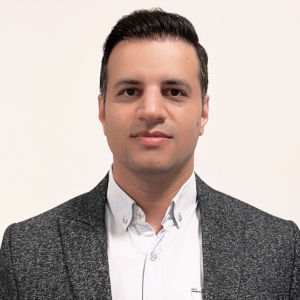
VIZJA University MemberGholam Hassan Khajavy, PhD
Gholam Hassan Khajavy is an Assistant Professor of Language Education at VIZJA University, Poland and a postdoctoral researcher at the Department of English Studies, University of Graz, Austria. His main research interests are at the intersection of the psychology of language learning and teaching and instructed second-language acquisition. He examines the role of individual differences such as emotions and mindsets in foreign language learners’ and teachers’ performance. He has published in various international journals, including TESOL Quarterly, Studies in Second Language Acquisition, Language Learning, and Contemporary Educational Psychology.
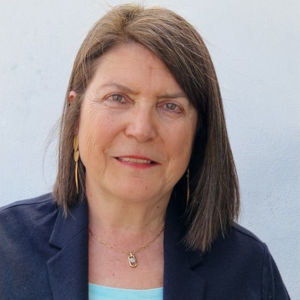
Collaborating MemberProf. Jasone Cenoz
Jasone Cenoz is an expert in multilingual education, minority languages, linguistic landscape, and second and third language acquisition. She has been the President of the International Association of Multilingualism and Professor of Education at the University of the Basque Country.
Read more
She was awarded an Honorary Doctorate by the University Jaume I in 2024. She has published numerous articles and several books and has presented her research results at numerous international conferences and seminars in different parts of the world. Jasone Cenoz collaborates with several international research agencies. She has been a visiting professor and researcher at the University of Chicago and the GC CUNY, and has conducted research stays at several universities. She received the Spanish Association of Applied Linguistics Award for her book "Towards Multilingual Education" (2009) and the Ikerbasque Research Award (2022). She is among the 2% most cited scientists in the world. She is a member of the Advisory Council of the Organization of Ibero-American States (OEI).
Collaborating MemberIlona Banasiak, PhD
Ilona Banasiak is an Assistant Professor at the Faculty of Applied Linguistics at the University of Warsaw, Poland. She holds a PhD in Linguistics from Adam Mickiewicz University in Poznań. She has authored and co-authored numerous academic publications, including a contribution to the volume The Cambridge Handbook of Multilingual Education (2025). She has presented her research at leading international conferences, including EuroSLA (Tromsø), DIELE (Tokyo, Bangkok), the International Symposium on Bilingualism (Sydney), and the Sociolinguistics Symposium (Auckland). Her research interests include second language acquisition, family language policy, bi- and multilingual education, as well as teacher education.
Collaborating MemberAnna Becker, PhD
Anna Becker is Founder and Director of the International Scholars Alliance and a Marie Skłodowska-Curie Fellow (2023–2025) at the Polish Academy of Sciences, Warsaw. Her research spans language, migration, identity, higher education policy, and comparative and international education, with a growing focus on epistemic justice and equitable academic spaces for internationally mobile scholars. Recipient of the Elizabeth Sherman Swing Award (2023), she has taught and researched across Germany, Switzerland, Poland, and the United States. She serves as Section Editor at Language Awareness and on the editorial boards of Cambridge Elements in Language and Power, Comparative Education Review, and the Springer Books Series on AI, Intercultural Communication, and Education, with publications and books in leading international venues.
Collaborating MemberSally Cook, PhD
Sally Rachel Cook is an Honorary Research Fellow at Birkbeck, University of London. Her research focuses on multilingualism, second language acquisition, and social justice, with particular attention to the lived language experiences of asylum seekers, refugees, and survivors of torture, trauma, and modern slavery. Her work is situated within Applied Linguistics and informed by phenomenological and ethnographic approaches. She has conducted long-term qualitative research within therapeutic and support settings for forcibly displaced persons. She is currently applying this work through collaborative staff-development workshops for practising teachers addressing multilingualism and trauma.
Collaborating MemberDenis Weger, PhD
University of Vienna, Postdoctoral Researcher and Co-Head of the Language Teaching and Learning Research Group. Centre for Teacher Education.
Collaborating MemberLiceum Ogólnokształcące im. Jana Pawła II in Nadarzyn
Represented by the Principal, Magdalena Drzewucka, M.A
Collaborating MemberProf. UW Małgorzata Żytko, PhD, (Hab.)
Małgorzata Żytko is an Associate Professor and Habilitated Doctor in the Humanities, working at the Faculty of Education at the University of Warsaw. She is an active member of the Association for Teacher Education in Europe (ATEE) and the Polish Pedagogical Society (PTP). She is engaged in educational initiatives at the local government level and serves as an expert on the Warsaw Education Council, appointed by the Mayor of Warsaw. Her research focuses on the psychological, pedagogical, and social dimensions of child development and education, the professional development of teachers, and the design and implementation of innovative educational solutions for primary schooling. She is the author of numerous scholarly publications and coordinates research projects funded through both national and international grants.
Collaborating MemberProf. Peter De Costa
Peter De Costa is a Professor in the Departments of Linguistics, Languages & Cultures and Teacher Education at Michigan State University. His research areas include emotions, identity and, ideology in SLA and Second Language Teacher Education. He is an associate editor of The Modern Language Journal, a former co-editor of TESOL Quarterly, and a Past President of the American Association for Applied Linguistics.
Collaborating MemberProf. Ana Maria Ferreira Barcelos
Ana Maria F. Barcelos is Full Professor of English and Applied Linguistics in the Graduate Program in Letters at the Federal University of Viçosa (UFV), Brazil. She holds a Ph.D. in Applied Linguistics from the University of Alabama, USA, and completed postdoctoral research at Carleton University, Canada, and the University of Florida, USA.
Read more
Her research focuses on language learning beliefs and their relationship to emotions, identities, agency, and teacher education in the social context of language learning and teaching. More recently, she has been investigating the role of pedagogical love in language education.
She has published extensively in these areas and co-edited several influential volumes, including Beliefs about SLA: New Research Approaches (with Paula Kalaja, Kluwer, 2003); Narratives of Learning and Teaching EFL (with Paula Kalaja and Vera Menezes, Palgrave Macmillan, 2008); Beliefs, Agency and Identity in Foreign Language Learning and Teaching (with Paula Kalaja, Maria Ruohotie-Lyhty and Mari Aro, Palgrave Macmillan, 2016); and Pedagogical Love in Adult Education (with Elizabeth Vanderheiden and Claude-Hélène Mayer, Springer, 2025).
Collaborating MemberProf. Daniel Xerri
Daniel Xerri is an Associate Professor in Applied Linguistics and TESOL at the University of Malta, and the Chairperson of the ELT Council. He has published widely on different areas of English language education. His main research interests are teacher research and professional learning. His most recent book is The Rise of English as a Glocal Language: Reimagining its Role in an Era of Deglobalisation (Springer, 2026). www.danielxerri.com
Collaborating MemberMichael T. Maksimchuk, PhD
Michael T. Maksimchuk is an educational consultant, researcher, and former science educator specializing in educational assessment, formative assessment practices, curriculum design, and the integration of emerging technologies in teaching and learning. He currently serves as an Assessment Consultant at Kent Intermediate School District in Michigan, USA, where he leads professional learning initiatives and supports districts in developing balanced systems of assessment that promote equitable and meaningful learning experiences for all students.
Read more
Dr. Maksimchuk earned his Doctor of Education in Curriculum and Instruction with a specialization in STEM Leadership from the American College of Education. His doctoral research examined the experiences of Michigan high school science teachers implementing the Next Generation Science Standards (NGSS). He also holds a Master of Education in Science Curriculum and Instructional Design and maintains certifications in educational leadership, secondary science education, and assessment specialization.
His scholarly and professional work focuses on assessment literacy, equitable assessment practices, formative assessment processes, artificial intelligence in education, standards-based instruction, and science education. He has authored publications and presented nationally and internationally on topics including assessment design, educational equity, AI-supported feedback systems, and instructional improvement. His work has been featured through organizations such as the Michigan Assessment Consortium, the National Council for Measurement in Education, and international academic publishers including Routledge and TESOL Press.
Drawing on more than fifteen years of experience in K–12 education as a teacher, instructional leader, and consultant, Dr. Maksimchuk collaborates with educators, schools, and policymakers to strengthen assessment systems, improve instructional decision-making, and advance student-centered learning. His current research interests include assessment coherence, educational technology, equitable assessment for multilingual learners, and the responsible use of artificial intelligence in educational contexts.
Collaborating MemberJaber Kamali, PhD
Jaber Kamali, PhD, affiliated with Ibn Haldun University, Istanbul, Türkiye, is the Editor-in-Chief of the Language Teacher Education Research Journal and TESOL Coordinator at IHU. He has published on various aspects of teacher education in international journals, including TESOL Quarterly, the European Journal of Teacher Education, Language Teaching Research, International Journal of Educational Technology in Higher Education, and International Journal of Multilingualism, among others, and also edited and is editing some edited collections and special issues such as the one on Technology-Enhanced Language Teacher Education in the Technology in Language Teaching & Learning journal. He was also among the top-cited authors of Wiley publications in 2020-2021. His latest publication, "Language as Power in Language Teacher Education Ecosystem," is published in the Cambridge Elements series.
Collaborating MemberHuseyin Uysal, PhD
Huseyin Uysal is a Research Assistant Professor in the Department of English Language Education at The Education University of Hong Kong. He holds a PhD degree in Curriculum and Instruction with a specialization in ESOL/Bilingual Education from the University of Florida. His work appeared in venues such as TESOL Journal, TESOL Quarterly, Linguistics and Education, and Urban Education as well as Bloomsbury, and Springer. He is currently serving as the Editor-in-Chief of the Journal of Education for Multilingualism, and the Co-Editor of the Journal of Education, Language, and Ideology.
Collaborating MemberAndrea Perales Fernández de Gamboa, PhD
Andrea Perales-Fernández-de-Gamboa is an Assistant Professor at the University of the Basque Country (UPV/EHU). Her research focuses on multilingual and intercultural education, Culturally Sustaining Pedagogies, with particular attention to educational contexts marked by linguistic and cultural diversity. Her work explores how language, identity, and power intersect in school settings, and how educational practices can contribute to more equitable and inclusive learning environments. She has participated in several competitive research projects related to language education and teacher training, contributing to both empirical and theoretical developments in the field. In addition to her research and teaching activities, she regularly serves as an external reviewer for peer-reviewed academic journals, collaborating with the international research community. Her academic work is grounded in a strong commitment to socially responsive education and critical perspectives on language and culture.
Collaborating MemberJaione Diaz Mazquiaran, PhD
Jaione Díaz Mazquiaran is a lecturer and postdoctoral researcher at Mondragon University in the Basque Country. She holds two master’s degrees: one in Bilingual Education from Illinois State University, and another in Intercultural Communication and TESOL from the University of Maryland, Baltimore County, where she studied as a Fulbright Scholar. She earned her PhD in Education from Monash University in Melbourne, Australia. Her research explored the language practices and perceptions of students from migrant backgrounds in Basque-medium instruction, as well as the influence of parental and teacher language beliefs and expectations. With an international profile, she has studied and worked as a language teacher and academic advisor in multilingual contexts across Canada, the United States, Scotland, Spain, Turkey, Bolivia, and Australia, and has presented her work at national and international conferences. She recently served as the 2025 Alan R. King Visiting Scholar in Sociolinguistics in Wales. In addition, she teaches undergraduate and postgraduate courses related to applied linguistics research and sociolinguistics, and is currently involved in a POCTEFA joint project on multilingualism in cross-border contexts.
Collaborating MemberBoglárka Spissich, PhD
Boglárka Spissich is a practising EFL teacher and teacher trainer. She is a lecturer at Széchenyi István University of Győr, Faculty of Humanities, Education and Social Sciences. She holds a PhD in Language Pedagogy and English Applied Linguistics, specialising in the use of digital tools for language learning, especially social media and video games. Her research focuses on how social media platforms and video games can support second language development, particularly in relation to learner engagement, informal learning practices, and the development of communicative competence in digitally mediated contexts. Another strand of her research looks at the pedagogical implications of these environments, particularly how teachers can support learner participation and make informed use of digital resources. As Vice-President of TESOL-Hungary, she takes part in organising events for EFL teachers and regularly presents at international conferences.
Collaborating MemberProf. Anne Burns
Anne Burns is an Honorary Professor at the University of New South Wales, Sydney, and an Adjunct Professor at Curtin University, Perth. She is also Professor Emerita at Aston University, Birmingham, and has been a Visiting Professor at UNITEC Auckland, the University of Stockholm, The Education University, Hong Kong, Soka University and Kanda University of International Studies, Tokyo, and Thammasat University, Bangkok. She specialises in Applied Linguistics, TESOL and Language Education and has taught, supervised and published extensively, specifically in the areas of teaching speaking, genre theory, language teacher education, qualitative research and action research.
Read more
Anne Burns is an Honorary Professor at the University of New South Wales, Sydney, and an Adjunct Professor at Curtin University, Perth. She is also Professor Emerita at Aston University, Birmingham, and has been a Visiting Professor at UNITEC Auckland, the University of Stockholm, The Education University, Hong Kong, Soka University and Kanda University of International Studies, Tokyo, and Thammasat University, Bangkok. She specialises in Applied Linguistics, TESOL and Language Education and has taught, supervised and published extensively, specifically in the areas of teaching speaking, genre theory, language teacher education, qualitative research and action research. She has authored or edited 24 books and published over 100 journal articles. For 13 years she was the Academic Advisor to OUP's prestigious Applied Linguistics Series and is currently the Editor for Routledge's Research and Resources Series. Her most recent book, co-edited with Kenan Dikilitaș, is The Routledge Handbook of Language Teacher Action Research (2025). She has also served on the boards of AILA (the International Applied Linguistics Association), ALAA (the Applied Linguistics Association of Australia), and the Extensive Reading Foundation, and was Chair of TESOL International's Standing Committee of Research and Member of The British Council National English Language Advisory Group. In 2018, she was recognised by TESOL International with a 50 @ 50 Award for international contributions. In 2026, she was included in Stanford's World Ranking list of the top 2% most-cited scientists globally in the field of Languages and Linguistics
Collaborating MemberArtzai Gaspar, PhD
Artzai Gaspar holds a PhD in Language Education from the University of the Basque Country (UPV/EHU). He is currently an Assistant Professor at the Public University of Navarre (UPNA) in the area of Language and Literature Education. He is an active member of the research group Linguistics and Intangible Heritage (UPNA) and a researcher affiliated with the Institute for Advanced Social Research I-Communitas (UPNA). His research focuses on the teaching of academic language, the development of communicative competence, and the didactics of minority languages in multilingual contexts. He has published articles and book chapters in peer-reviewed journals and has presented his work at national and international conferences. In addition, he teaches undergraduate and postgraduate courses related to language education, research in applied linguistics, and sociolinguistics.
Collaborating MemberMikel Gartziarena, PhD
Mikel Gartziarena is an Assistant Professor in the Department of Language and Literature Didactics at the Faculty of Education, Philosophy and Anthropology, University of the Basque Country (EHU). He holds an international PhD in Education, Applied Linguistics (Cum Laude; Extraordinary Doctoral Award in Education Sciences, 2023). His research focuses on teachers' beliefs and attitudes toward minoritised languages and multilingualism, multilingual language teaching approaches, and the sociolinguistic factors essential to the revitalisation and use of minoritised languages.
Read more
He has led and participated in research projects funded by the Basque Government, the Provincial Council of Araba, EHU, COST Action, Spanish Ministry and Erasmus+, and has carried out research stays at Aberystwyth and Bangor Universities (Wales), the Université de Montréal and McGill University (Canada), Bordeaux Montaigne and UPPA (Northern Basque Country), the Università di Trieste (Italy), Boise State University and the University of Nevada, Reno (USA). In 2024 he was appointed Alan R. King Professor in Residence at the Centre for Advanced Welsh and Celtic Studies in Aberystwyth (University of Wales). He has authored numerous publications in Basque, Spanish and English in journals including System, International Journal of Multilingualism, Language and Education, and Current Issues in Language Planning, serves as the editor-in-chief of the EHU’s language and education academic journal TANTAK.
Collaborating MemberGiulia Sulis, PhD
Giulia Sulis is an adjunct professor of English at the University of Cagliari, Italy. She recently led a large-scale project funded by the Austrian Science Fund (FWF), serving as Principal Investigator and Senior Postdoctoral Researcher at the University of Graz, Austria. Previously, she worked as a Postdoctoral Researcher on another FWF-funded project on language teacher wellbeing, led by Prof. Sarah Mercer. She has also taught a range of teacher training and undergraduate courses at the University of Graz and at Lancaster University, UK, where she earned her PhD in Linguistics.
Read more
Before that, she completed a Master’s degree in Applied Linguistics at the University of Groningen, the Netherlands, and worked as an English language tutor in Saint-Médard-en-Jalles, France. Her research interests lie at the intersection of psychology and language education, with a particular focus on language learning engagement, multilingualism, and wellbeing in language education. She has authored several publications in these areas, including a monograph on language teacher wellbeing co-authored with colleagues at the University of Graz, as well as an edited volume on multilingualism and the psychology of language learning and teaching with Åsta Haukås and Sarah Mercer. She is also Co-Editor-in-Chief of the Journal for the Psychology of Language Learning (JPLL).
Collaborating MemberBeverley Costa, PhD
Beverley Costa is a psychotherapist, trainer, and founder of Mothertongue multi-ethnic counselling service, Colleagues Across Borders and The Pásalo Project. For over two decades, she has practised as a psychotherapist, clinical supervisor, and researcher, working therapeutically (with and without an interpreter) across diverse languages with people who have a history of migration. She has facilitated and trained facilitators of reflective practice groups, pioneering therapeutic work across languages and training thousands of professionals internationally.
Read more
She is a Senior Practitioner Fellow at Birkbeck, University of London, and a Senior Visiting Research Fellow at the University of Reading. She has written numerous papers and chapters and created training resources and films. She is currently making a training film for an ESRC-funded project "Negotiating multilingualism in situations of conflict" which is led by Dr Monika Schmid (in the Department of Language and Linguistic Science at the University of York). Beverley is the author of Other Tongues – psychological therapies in a multilingual world, published by PCCS Books. Her latest book, The Art of Group Facilitation: Difficult Conversations and Reflective Practice, is due to be published by Routledge in the autumn of 2026.
Collaborating MemberMehmet Demir, PhD
Mehmet Demir is a Clinical Psychologist and Lecturer at the University of Essex. In addition to his clinical psychology training, he holds a PhD in Refugee Care Studies. His primary research and professional interests include multilingualism, forced migration, and culturally responsive mental health care. Throughout his career, he has worked with a range of NGOs and United Nations agencies as a clinical psychologist, consultant, and project manager across several countries. He currently lectures on the Doctorate in Clinical Psychology programme at the University of Essex, UK, while also providing consultancy to organisations on working effectively in multilingual settings.
Collaborating MemberBarbara Hofer, PhD (Hab.)
Barbara Hofer lives in the trilingual province of South Tyrol, Italy. She lectures at the Free University of Bolzano/Bozen/Bulsan (I) (Faculty of Education) and at Innsbruck University (A) (English Department) where she is also a member of DyME Research. Barbara Hofer holds a PhD in English linguistics and obtained her Habilitation (Venia docendi-Fachdidaktik Englisch) at Innsbruck University. Her research interests include multilingual competences, meta- and crosslinguistic awareness, language attitudes, multilingual assessment, Dominant Language Constellations, and Complex Dynamic Systems theory amongst others.
Read more
She has authored several books and articles on (early) multilingual competences and multilingual learning. In her most recent research she investigates multilingual identities in minority settings and explores how different life ecologies affect students‘ perceptions of their multilinguality and self. She is also currently looking into multilingual learning in mature learner-users.
Membership of the VISION Center
1. VISION may admit members who support and contribute to the mission of VISION.
2. Membership in VISION is voluntary.
3. Membership is intended for individuals who demonstrate appropriate academic, professional, or practical engagement in the development of multilingualism in teacher education.
4. The following membership categories are established:
a) members affiliated with the VIZJA University,
b) collaborating members (external members).
5. VISION may invite other non-member individuals to participate in specific activities and initiatives.
6. Honorary members are individuals recognized for their exceptional contribution to the activities and development of VISION.
7. Members are expected to uphold ethical standards in all activities related to VISION.
8. Within the framework of VISION’s activities, members are expected, on an annual basis, to demonstrate:
a) participation in at least one activity (e.g., attendance at an organized event, delivering a presentation, etc.), or
b) a substantive contribution (e.g., developing topics related to multilingualism in educational contexts).
Membership Procedure
1. The membership procedure includes the following stages:
a) application (e.g. biography, brief description of research/teaching interests), or
b) invitation to membership.
2. The decision to grant or refuse membership is made by the Management Board, taking into account at least one of the following criteria:
a) consistency with the VISION profile and mission,
b) potential for cooperation,
c) experience.
3. The membership period is 1 year (this does not apply to honorary membership). After this period, the Management Board shall, upon the member’s request, decide on the extension of membership.
4. Membership expires in the event of:
a) resignation by the member,
b) expiry of the one-year period and refusal to extend membership for a further term,
c) removal from the list of members,
d) death.
5. Removal from the list of members shall be made by the Management Board in the event of:
a) violation of the law,
b) violation of the rules of cooperation,
c) violation of ethical standards,
d) plagiarism,
e) research misconduct,
f) lack of participation in activities,
g) lack of contact with VISION.
Contact details
VIZJA University
VISION – European Center for Multilingualism in Teacher Education
School of Humanities and Fine Arts
Address: Okopowa 59, 01-043 Warsaw, Poland
E-mail: vision.center@vizja.pl